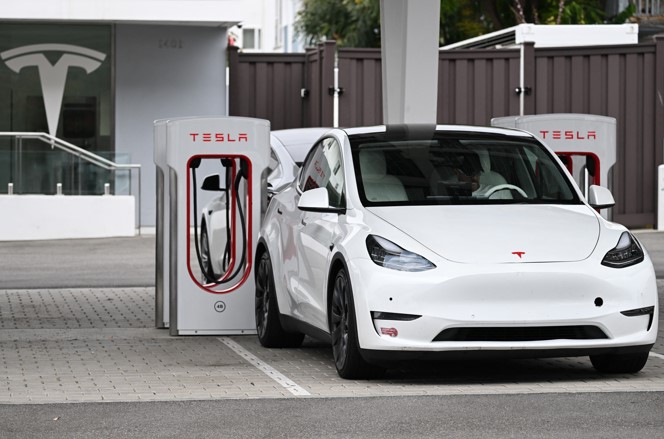
AGS NEWS – The European Commission announced plans on Tuesday to impose a nine-percent tariff on Tesla’s electric vehicles made in China.
This rate is much lower than the tariffs facing Chinese manufacturers, unless Beijing makes concessions in an ongoing trade dispute.
Last month, Brussels imposed provisional tariffs on Chinese electric vehicles (EVs) in addition to the existing 10 percent duty, following an anti-subsidy investigation that found Chinese EVs were unfairly challenging European competitors.
The new draft plan, which aims to make these tariffs permanent at slightly revised rates, is open for feedback until the end of August and requires approval from EU member states by the end of October.
China’s commerce ministry expressed strong opposition to the tariffs and urged Brussels to avoid escalating trade tensions.
The European Commission indicated it is open to resolving the dispute without tariffs, but emphasized that the next move is up to China.
Beijing has appealed the measures to the World Trade Organisation (WTO), but the EU remains confident that the tariffs comply with WTO rules.
Chinese EV manufacturers are facing varying tariff rates: 17 percent for BYD, 19.3 percent for Geely, and 36.3 percent for SAIC, with slight adjustments from the preliminary rates.
Companies that cooperated with the EU’s investigation will face a 21.3 percent tariff, while non-cooperating firms will be hit with the maximum 36.3 percent duty.
ALSO READ: Tesla reports profit drop on price cuts, lower vehicle sales
Tesla, which produces Model 3 and Model Y cars in China, successfully secured a lower tariff of nine percent after the EU determined it received fewer Chinese subsidies than domestic manufacturers.
The subsidies considered included discounted battery supplies, below-market land use, and various export grants.
European manufacturers involved in joint ventures exporting EVs from China will receive the same tariff rate as their Chinese partners.
This affects companies like Volkswagen and BMW, which have voiced concerns that these tariffs could harm their business interests in China.
As the EU seeks to protect its auto industry and promote green growth, it faces the challenge of balancing these goals with maintaining trade relations with China.
The Chinese Chamber of Commerce to the EU criticized the commission’s actions as protectionist and warned of increased trade tensions.
The EU has recently launched multiple investigations into Chinese subsidies for various industries, while China has started its own probes into European imports.
China’s rise as a leading EV exporter, driven by significant state investment, has put pressure on European automakers. In 2023, Chinese EV exports increased by 70 percent to $34.1 billion, with nearly 40 percent destined for the EU.
 AGS NEWS