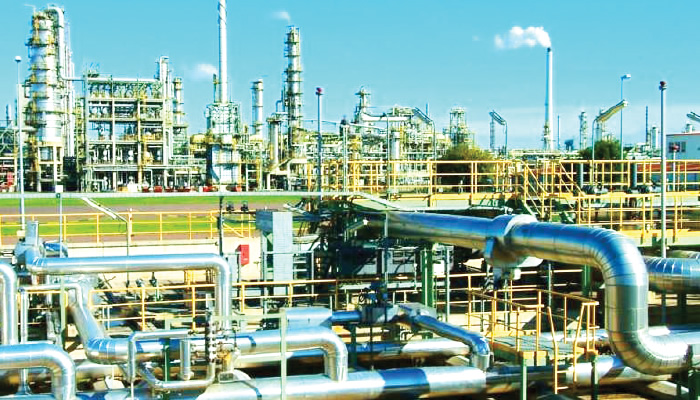
The initial crude feedstock for Dangote’s 650,000 barrels per day (b/d) refinery has reached Nigeria, marking a significant development towards the commencement of fuel production at the $19 billion facility, as reported by SP Global, citing market sources and tanker tracking data.
The OTIS tanker transported a cargo of 950,000 barrels of Agbami crude on December 6, and it was offloaded at the refinery’s terminal on Thursday.
ALSO READ: Dangote refinery granted license for 300,000bpd crude processing
This Suezmax tanker, chartered by the state-owned Nigerian National Petroleum Company (NNPC), represents the first batch of crude supplies for Dangote’s refinery as the massive plant begins its operational phase, according to a West African oil trader.
Although officially completed in May, the privately owned refinery has faced delays in producing oil products due to a shortage of domestic crude feedstock.
NNPC, holding a 20% stake in the refinery, recently agreed to provide 6 million barrels of crude oil as feedstock to the facility in December.
The Agbami field, operated by Chevron, is one of Nigeria’s major deepwater developments, producing approximately 100,000 b/d in the central Niger Delta.
Known for its light sweet crude with a gravity of 47.9 API and a low sulfur content of 0.04%, Agbami yields a significant proportion of naphtha and kerosene in the market.
NNPCL has chartered additional tankers to transport more crude shipments from offshore fields to the refinery later this month, according to the oil trader.
Despite repeated delays since its unveiling in 2013, the refinery’s startup is now progressing with most key units installed in 2019.
ALSO READ: Alex Iwobi reflects on Wizkid’s support during early days in his career
The crude distillation unit is designed to process 12 crudes simultaneously, including three Nigerian crude grades—Escravos, Bonny Light, and Forcados.
Upon full operation, the plant is expected to produce 327,000 b/d of gasoline, 244,000 b/d of gasoil/diesel, 56,000 b/d of jet fuel/kerosene, and 290,000 metric tons per year of propane/LPG, as outlined in previous Dangote presentations.
 AGS NEWS