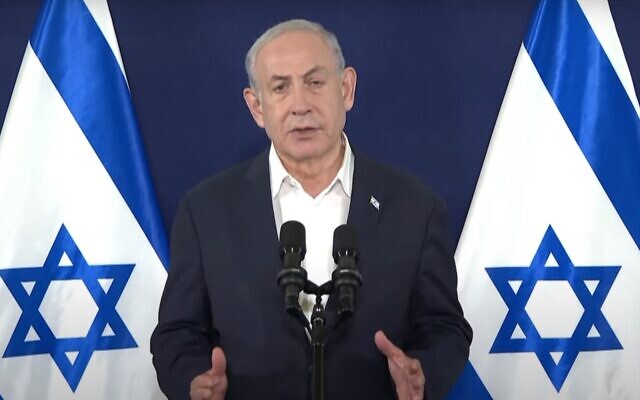
Israeli Prime Minister Benjamin Netanyahu, in a meeting with visiting US Secretary of State Antony Blinken, firmly expressed his rejection of any temporary halt to the conflict with Hamas unless it includes “the release of our hostages.”
Blinken, on his second visit to the Middle East in less than a month, aimed to strike a balance between Washington’s support for Israel following a deadly Hamas attack on October 7 and concerns over the rising civilian casualties resulting from the Israeli bombardment.
During a press conference, Secretary Blinken called for a humanitarian pause in the conflict, emphasizing that it would allow humanitarian aid to enter Gaza and facilitate efforts to secure the release of hostages, all while helping Israel achieve its goal of defeating Hamas.
Blinken acknowledged that several critical questions were raised during their discussions, including how to maximize the flow of humanitarian assistance during any ceasefire, how to link the ceasefire to the release of hostages, and how to prevent Hamas from exploiting such pauses for its advantage.
He stressed the urgency of addressing these issues, believing that solutions could be found.
Shortly after Blinken’s statement, Prime Minister Netanyahu, in a televised address, unequivocally rejected the idea of a temporary ceasefire that does not include the release of hostages.
He reaffirmed that Israel would continue its military operations with full force, vowing to achieve a “sharp and clear” victory that would resonate for generations.
Netanyahu stated that Israel’s enemies seek to destroy the country but would ultimately fail.
He reiterated Israel’s commitment to ongoing military operations until victory, which he defined as the destruction of Hamas, the return of the hostages, and the restoration of security for Israeli citizens and children.
ALSO READ: Biden supports Israel’s Gaza hospital strike and condemns Hamas
He praised the dedication of Israel’s soldiers, highlighting their continuous efforts in Gaza with close cooperation between the IDF’s ground and air forces.
Meanwhile, in Lebanon, Hezbollah leader Hassan Nasrallah issued a prolonged statement.
Netanyahu issued a warning to Israel’s “enemies in the north,” cautioning them against escalating the conflict.
He emphasized the potentially high cost of such a decision.
“We are striving to minimize danger to our soldiers, but we will do whatever is necessary to defeat our enemies,” Netanyahu concluded.
The situation remains tense as the conflict between Israel and Hamas continues, with diplomatic efforts ongoing to find a resolution that addresses the concerns of all parties involved.
 AGS NEWS