
By Timilehin Agunbiade
Criminals commit crimes, often causing harm to people in the process. As humans, we naturally dislike anything that poses a danger let alone inflicts harm upon us. Contrary to this, here is a list of ten real-life criminals who surprisingly garnered affection from people rather than being met with disapproval.
However, It is important to note that the public did not widely embrace most, if not all of these criminals; rather, they found favor within certain segments of the population.
10. Jesse James
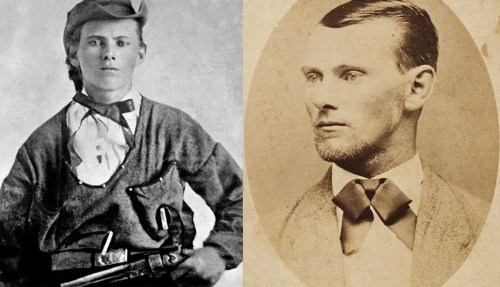
The notorious American outlaw Jesse Woodson James, led an extravagant lifestyle, often splurging on luxurious items, extravagant clothing, and fine jewelry during the late 1860s and early 1870s.
His expenditures were fueled by the spoils of his daring robberies, which included scores from banks and trains throughout this period.
Despite his criminal activities, Jesse James garnered a surprising level of affection from certain segments of the public during the same period.
Many people admired his charm, charisma, and daring escapades, romanticizing him as a modern-day Robin Hood, robbing from the rich and giving to the poor.
His confederate past played a significant role in earning sympathy from certain southern sympathisers during the post American civil war era, especially from 1865 to 1876. Some viewed him as a symbol of resistance against Northern authorities.
9. Al Capone
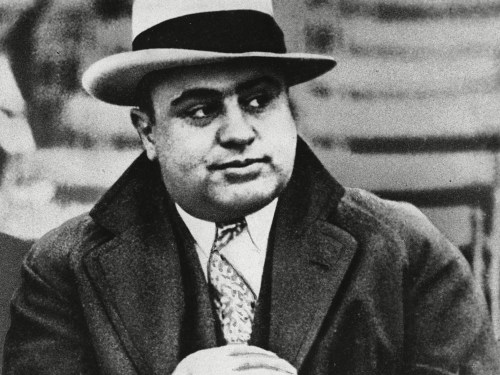
Alphonse Capone was an American gangster who rose to infamy during the prohibition era in the United States. Born on January 17, 1899, in Brooklyn New York, he became one of the most prominent figures in organized crime during the 1920s and early 1930s.
During his reign as a crime boss, Capone amassed significant wealth through illegal activities primarily bootlegging and illegal alcohol distribution.
He cleverly exploited the ban on alcohol during prohibition, establishing a vast network of speakeasies and breweries.
The peak of his criminal empire was between 1925 and 1931. However, Al Capone managed to maintain a level of popularity among certain segments of the public.
He engaged in some public relations efforts, such as sponsoring soup kitchens during the Great Depression – a severe and prolonged economic downturn in the United States – which endeared him to some impoverished communities.
8. Pablo Escobar
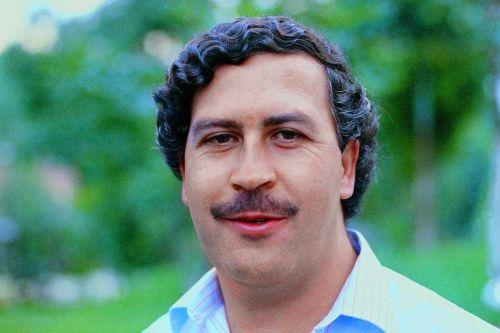
Born on December 1, 1949, in Rionegro, Colombia, Pablo Emilio Escobar was a notorious Colombian drug lord and one of the most powerful and infamous criminals in history who established a vast cocaine empire during the 1980s and early 1990s.
Escobar’s criminal career was primarily centered around the illegal drug trade. He became the leader of the Medellin cartel which was responsible for a significant portion of the global cocaine production and distribution. The cartel’s operations were characterized by violence, corruption and ruthlessness.
During his reign, Pablo Escobar amassed immense wealth, estimated to be billions of dollars. He used his ill-gotten fortune to finance various philanthropic projects, particularly in Medellin, his hometown.
He constructed housing projects, sports facilities, and schools, earning him some support and admiration from certain sections of the community.
7. Bonnie and Clyde
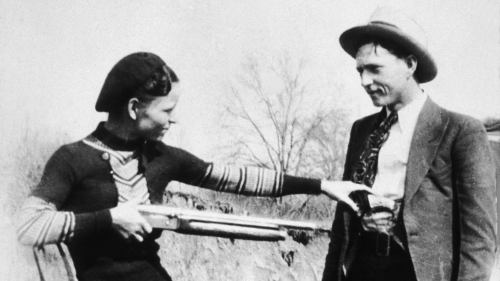
Bonnie and Clyde were infamous American criminals and romantic partners who gained notoriety during the Great Depression era. Bonnie Parker, born on October 1, 1910, and Clyde Barrow, born on March 24,1909, formed a gang with other associates and embarked on a violent crime spree that spanned from 1932 to 1934.
Their criminal activities were characterized by bank robberies, burglaries, and violent encounters with law enforcement. Bonnie and Clyde’s escapades captured the public’s imagination, with media coverage portraying them as modern-day outlaws and folk heroes.
The couple’s love story added an element of romance to their criminal exploits, making them figures of fascination and sympathy for some.
Their photographs and stories were widely circulated, and their daring escapes from law enforcement added to their legendary status.
Bonnie and Clyde’s story has been immortalized in books, movies, and songs, solidifying their place in American folklore. They continue to be depicted as symbols of rebellion and anti-establishment sentiments.
6. John Dillinger
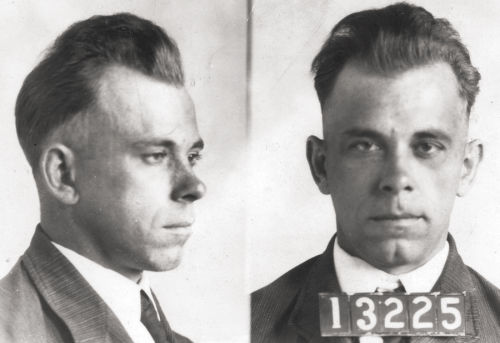
John Dillinger was an infamous American criminal during the early 20th century. Born on June 22, 1903, in Indianapolis, Indiana, he became a notorious bank robber during the height of the Great Depression.
Dillinger’s criminal career gained significant attention due to his daring heists and successful prison escapes. Along with his gang, which included associates like Baby Face Nelson and Pretty Boy Floyd, he robbed several banks and police arsenals, amassing considerable wealth.
His charismatic and audacious figure, and his daring exploits made him a sort of anti-hero in the eyes of some, especially those who were disillusioned with the government during the Great Depression.
5. Ned Kelly
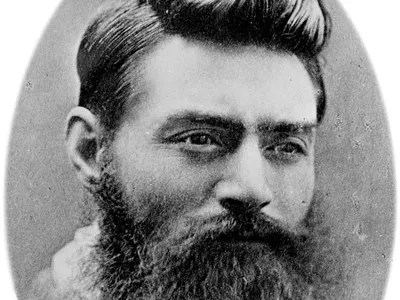
The Australian outlaw, Ned Kelly, led a life that captivated the public in the late 1800s. Born in June 1855, Kelly’s audacious exploits and charismatic persona endeared him to many. However, his reckless endeavors required substantial funds.
Between 1878 and 1880, Kelly and his gang engaged in multiple bank robberies. One significant heist took place on December 9, 1878, at the National Bank in Euroa, where they secured £2260. Another notable robbery occurred on February 10, 1879, at the Bank of New South Wales in Jerilderie, yielding £2000.
Kelly’s love from the people stemmed partly from his fierce fight against perceived injustices. He was vocal against police corruption and mistreatment of the lower classes.
Moreover, his efforts to evade capture during the Glenrowan Siege on June 28, 1880, displayed his determination to resist authorities.
Despite his criminal actions, Kelly was seen as a folk hero by some, admired for his defiance against an oppressive system, his ability to connect with the working class and challenge the established order contributed to his popularity.
4. Phoolan Devi
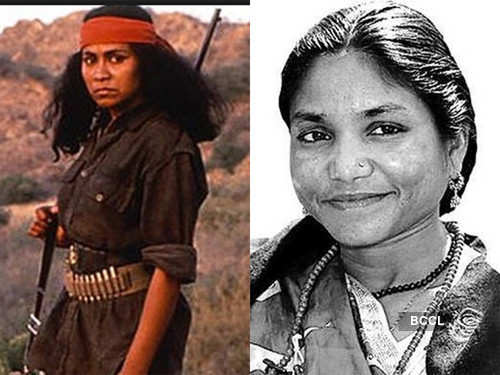
Phoolan Devi, a formidable figure in Indian history, was born on August 10, 1963, in Uttar Pradesh. Raised in a poor family, she faced hardships and social injustices from an early age. At a young age, Phoolan Devi was married off against her will, and she endured abuse and violence in her marital home.
Subsequently, she fled and found refuge in a group of bandits. There, she learned to wield a gun and joined the notorious gang led by Vikram Mallah.
During her time as a bandit, Phoolan Devi gained a reputation for taking revenge against upper-caste men who had wronged her and oppressed her community. Her acts of retaliation earned her the label of “Bandit Queen.”
In 1983, she and her gang committed a heinous act, the Behmai massacre, where they killed several men from the upper caste Thakur community. This incident made her a feared and wanted criminal in the eyes of the authorities.
After surrendering in 1983, Phoolan Devi spent 11 years in prison, where she faced various legal battles. In 1994, she was released and sought to transform her life by pursuing a political career.
Phoolan Devi’s journey from banditry to politics was marked by significant challenges and controversies. She won a seat in the Indian Parliament in 1996 and continued to advocate for the rights of marginalized communities.
However, on July 25, 2001, Phoolan Devi was assassinated outside her home in Delhi, leaving a legacy of both admiration and criticism.
3. Billy The Kid
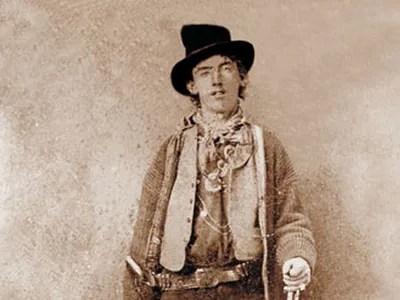
Billy the Kid, born Henry McCarty, was a notorious Old West outlaw who operated during the late 1800s. He is known for his involvement in several conflicts and killings during the Lincoln County War in New Mexico.
Billy the Kid spent time with various outlaw gangs and was involved in cattle rustling and robberies. He managed to cultivate a sense of loyalty among those who saw him as a symbol of defiance against a changing world.
His untimely death at the hands of Sheriff Pat Garrett on July 14, 1881, only served to cement his legendary status.
Admiration for Billy the Kid was fueled by a variety of factors. His youth, combined with his charisma, created a romanticized image of a rebellious anti-hero who stood up against authority figures.
2. D.B Cooper
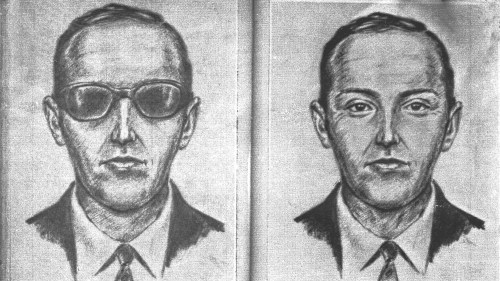
D.B. Cooper, an alias used by a man who hijacked a Northwest Orient Airlines flight in 1971, is famous for parachuting from the plane with a ransom of $200,000. His daring escape and mysterious disappearance have led to admiration and intrigue among the public.
While his true identity remains unknown, Cooper’s actions displayed a level of audacity that some found captivating. On November 24, 1971, Cooper boarded Flight 305 and after receiving the ransom, parachuted into the night somewhere over the Pacific Northwest. Despite extensive investigations, his fate and true identity remain unsolved.
The story of D.B. Cooper continues to capture public fascination due to the audacity of his actions and the numerous unanswered questions.
The idea of a lone individual outsmarting authorities and successfully disappearing into thin air feeds was romanticized into the image of an enigmatic figure who managed to outwit the system.
1. Frank Abagnale
Frank Abagnale gained notoriety during the 1960s for his remarkable ability to impersonate various professionals, including a doctor, lawyer, and airline pilot, while committing fraudulent activities.
His skillful deceptions and evasions of authorities, chronicled in the book and film “Catch Me If You Can,” captured the admiration of many.
Abagnale’s expenditures were fueled by his fraudulent schemes, which included forging cheques and engaging in financial scams. He successfully evaded capture for years, making him a folk hero of sorts to some who admired his cunning.
He was eventually apprehended in France in 1969, and after serving time in prison, he later became a consultant for anti-fraud efforts.
 AGS NEWS