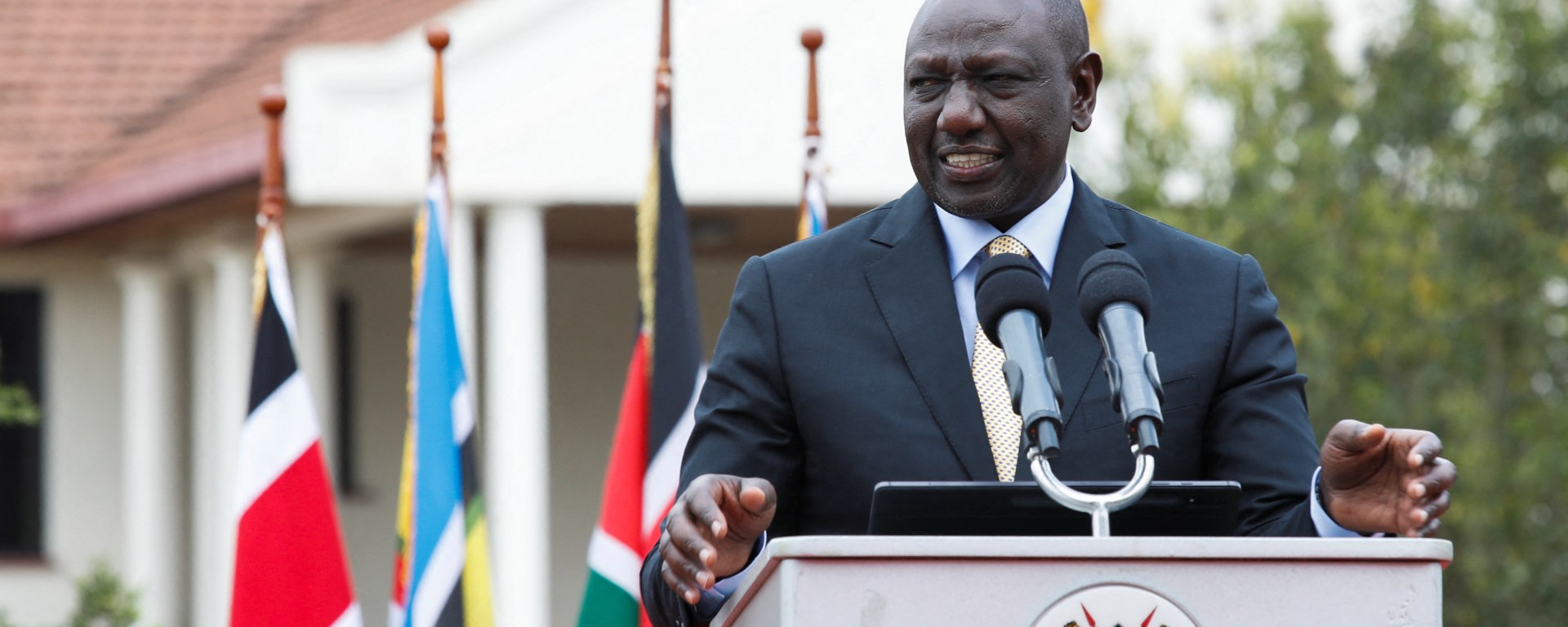
Kenyan President William Ruto has landed in Beijing to partake in the third Belt and Road Forum for International Cooperation, a two-day event held in the Chinese capital.
The forum holds significant diplomatic importance for China, marking the 10th anniversary of the Belt and Road Initiative.
Over 140 countries and 30 international organizations, including leaders, officials, and representatives from various sectors, have confirmed their participation.
The Belt and Road Initiative, launched by China in 2013, seeks to establish trade and infrastructure networks connecting Asia, Europe, Africa, and beyond along the historic Silk Road trade routes.
Over the past decade, more than 150 countries and 30 international organizations have engaged with the BRI framework, representing a notable milestone in global cooperation.
During his visit, William Ruto is expected to request a $1 billion loan and a debt repayment restructuring plan from China, according to Kenya’s vice-president.
The head of state aims to seek “more time to gradually repay the debt” and secure one billion dollars to complete road projects delayed due to funding shortages.
Kenya, one of East Africa’s largest economies, has amassed over $68 billion in debt, equivalent to 67% of its GDP.
Despite the economic challenges, China remains a significant creditor to Kenya. In Mombasa, East Africa’s largest port, China is financing the construction of a new terminal.
ALSO READ: Kenyan court temporarily halts deployment of police to Haiti
China has provided $5 billion for the completion of a major infrastructure project, a railway connecting Mombasa to Naivasha via Nairobi.
While campaigning for election, William Ruto criticized the borrowing policies of his predecessor, Uhuru Kenyatta, pledging to explore alternative ways to stimulate development and build necessary infrastructure.
China has refuted allegations that its substantial loans are driving some countries, particularly in Africa, into debt distress.
During a visit to Kenya in July, China’s Foreign Minister, Wang Yi, praised bilateral cooperation and emphasized a “win-win” partnership.
Despite its dynamic economy, a significant portion of Kenya’s population lives in poverty. Economic growth slowed to 4.8% last year, compared to 7.6% in 2021, influenced by the global repercussions of Russia’s Ukraine invasion and a devastating regional drought that impacted the agricultural sector.
The country also faces high inflation rates, with an annual rate of 6.8% recorded last month. In July, global ratings agency Fitch Ratings revised Kenya’s ability to repay international lenders from “stable to negative,” citing tax increases and social unrest.
 AGS NEWS