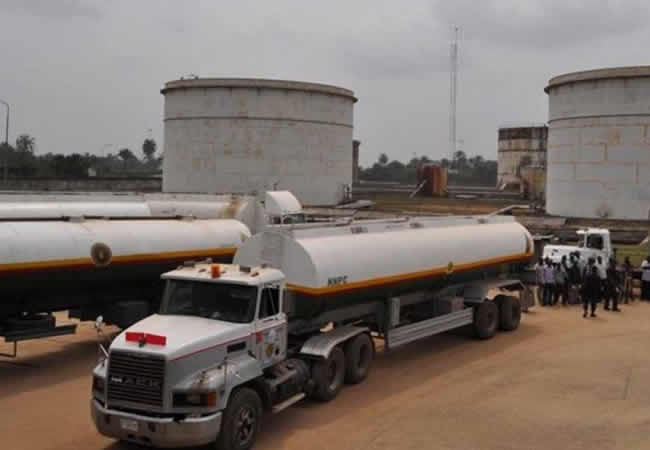
Petroleum product depots across the country are currently experiencing reduced activity due to a scarcity of products caused by foreign exchange rate fluctuations.
Oil marketers warn that the landing cost of Premium Motor Spirit (PMS), commonly known as petrol, has surged to N720 per litre.
As a result, filling stations are closing down in increasing numbers, posing the risk of widespread fuel shortages in the coming months.
The landing cost of PMS has risen from N651 per litre in August to the current N720 per litre.
Petroleum product dealers and filling station owners are grappling with the challenges posed by high crude oil costs, exchange rate instability, and soaring foreign exchange rates, making it increasingly difficult to operate their businesses.
Benneth Korie, the National President of the Natural Oil and Gas Suppliers Association of Nigeria (NOGASA), reported that many depots are virtually empty as their owners struggle to secure bank loans due to high-interest rates.
ALSO READ: CBN report warns of financial stability threat from eNaira
Banks are hesitant to guarantee funds release to industry stakeholders due to foreign exchange rate instability and the elevated cost of the dollar.
Korie stated that filling stations are shutting down daily, and both independent and major marketers are severely affected.
He emphasized the need for the government to intervene promptly to prevent a massive collapse of the industry, which would have dire consequences for the economy.
The rising landing cost of petrol, now at N720 per litre, reflects the challenges faced by the industry.
Patrick Ilo, the CEO of PETROCAM Trading (Nig) Ltd., pointed out that the company imported 52,000 metric tonnes of petrol, which was already priced at N720 per litre without subsidies.
He suggested that if the government had ceased subsidizing the product, the pump price in Lagos State should be around N729 per litre.
Ilo attributed the price hike to the high foreign exchange rate and suggested that the Nigerian National Petroleum Company Limited (NNPC) was still subsidizing petrol.
The Central Bank of Nigeria’s official exchange rate stood at around N766 per dollar, while the parallel market rate was approximately N990 per dollar.
 AGS NEWS