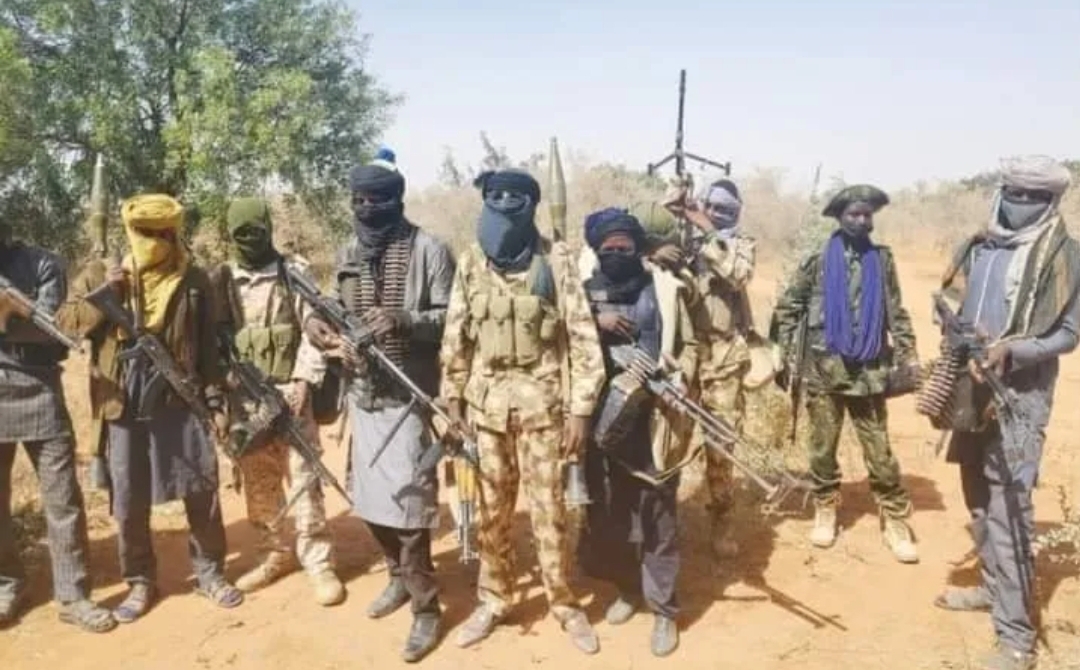
Bauchi State Governor, Bala Mohammed, has sounded the alarm over the escalating bandit attacks within his state, highlighting the nation’s looming existential crisis.
To spur President Bola Tinubu and his security apparatus into action, the United States government has issued a new travel advisory, warning its citizens to avoid 18 Nigerian states plagued by insecurity and brutality.
To combat this rising criminality, reinforced by novel strategies, Nigeria must intensify its efforts and mobilize the entire nation.
ALSO READ: Nigeria sets target to reach 20,000 megawatts of electricity by 2026
Originally confined to the North-West, bandits have now extended their deadly reach across the nation, creating a humanitarian catastrophe and a grave threat to Nigeria’s security and stability.
Forming alliances with Islamist groups, they’ve facilitated the spread of terrorism from the North-East to the North-West and North-Central regions.
Tinubu must respond promptly and decisively. Recently, the US State Department categorized 18 Nigerian states as ‘Level-4’ risk areas, signifying the highest danger level for American citizens abroad.
In contrast to earlier cautionary advisories, this time, the message is explicit: “Do not travel” to these states.
Their intelligence is precise. In the past month, bandits ambushed and killed 13 soldiers and officers in Niger State’s Chukuba, Shiroro Local Government Area. They also brought down a Nigerian Air Force helicopter, claiming the life of its pilot.
In June 2023, bandit groups killed 132 people in Sokoto, Zamfara, Benue, and Katsina states. On July 24, bandits in Zamfara’s Dan Gulbi district, Maru LGA, killed 34 people, including seven soldiers.
Meanwhile, Fulani herders/terrorists continue their destructive rampage in the North-Central states and Kaduna, displacing more than 80,000 individuals in Plateau State since May.
Between May and June, approximately 200 people lost their lives in Riyom, Barkin Ladi, and Mangu LGAs.
Bandits engage in cattle rustling and kidnapping for ransom, leading to displacement, loss of life, and economic hardships. Farmers face difficulties accessing their fields and are compelled to pay hefty tributes. Travel has been disrupted in certain regions, with over 151,380 people displaced in Niger State alone.
Geography plays a role, with four key states—Zamfara, Katsina, Kaduna, and Niger—featuring vast interconnected forests that provide hideouts and mobility for bandits. The Kamuku forest, spanning 1,121 square kilometers, links these states along with Kebbi State.
Ineffectual governance by state administrations also contributes significantly to the proliferation of banditry, according to the International Crisis Group.
Combating banditry demands fresh perspectives, novel strategies, and resolute law enforcement by federal and state governments. Local communities must be involved in these interdiction efforts.
Increasing boots on the ground, particularly in reclaimed territories, is essential to prevent the return of bandits.
ALSO READ: Why we quickly buried Mohbad – Father explains
This necessitates two immediate actions: withdrawing two-thirds of Nigerian Police personnel currently assigned to VIPs and individuals and empowering well-armed, trained, and equipped local security units.
The longer Nigeria delays in amending the 1999 Constitution to establish state policing, the deeper it plunges into insecurity. Without efficient local law enforcement, terrorism and banditry will persist.
Halt the inflow of small arms and light weapons through Nigeria’s porous borders and ports, which aids the bandits. Offering amnesty to murderers, kidnappers, and terrorists is a flawed approach that only failed states employ; governments must abandon this counterproductive tactic.
Banditry represents a multifaceted security challenge with severe implications, demanding Tinubu’s and the state governors’ undivided attention.
 AGS NEWS