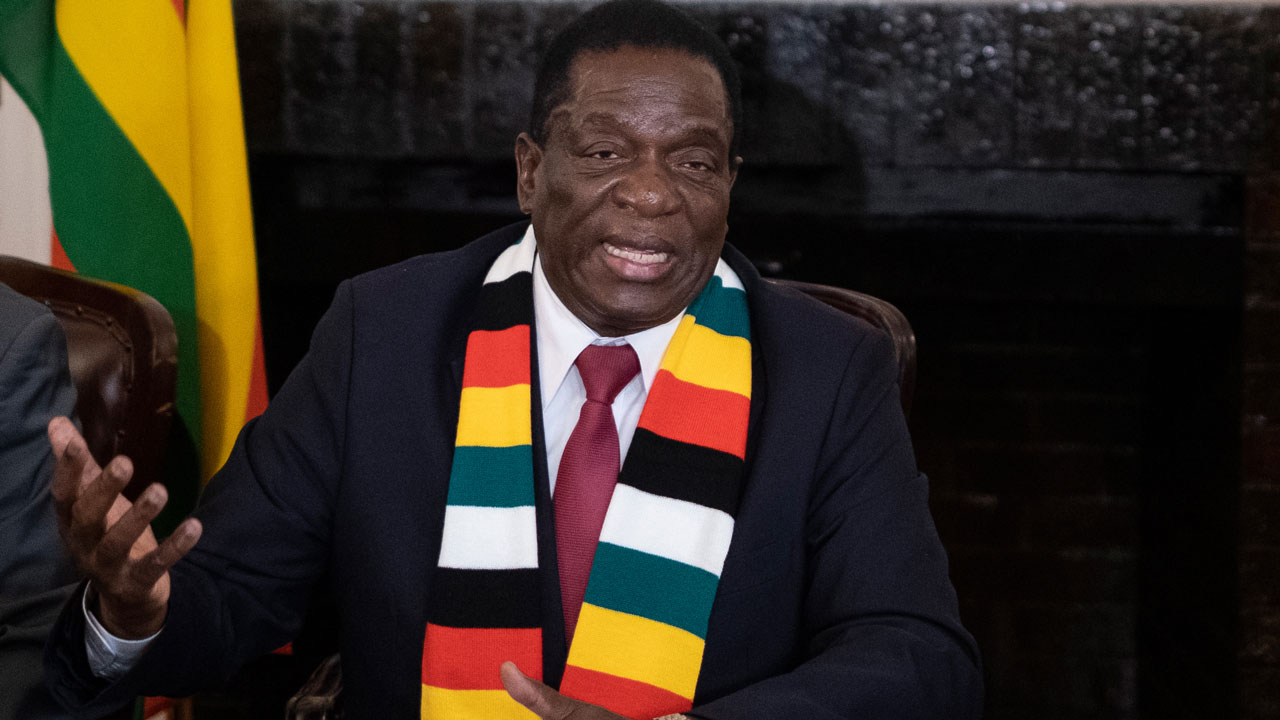
President Emmerson Mnangagwa has come under scrutiny for his appointment of his son, David Kudakwashe Mnangagwa, as the deputy finance minister in his newly formed cabinet after his re-election.
This decision has sparked concerns about nepotism within the government.
David Mnangagwa, aged 34, will serve as the deputy to Finance Minister Mthuli Ncube in the 26-ministry cabinet, with the president’s nephew, Tongai Mafidhi Mnangagwa, also appointed as the deputy minister of tourism and hospitality.
Criticism of President Mnangagwa’s cabinet has been voiced by Fadzayi Mahere, a lawmaker from the Citizens Coalition for Change (CCC).
She has described the cabinet as “indefensible” and raised concerns about legitimacy, corruption, violence, nepotism, incompetence, and ethical issues within the government.
In another controversial move, President Mnangagwa appointed a husband and wife team, Christopher and Monica Mutsvangwa, as ministers.
Christopher Mutsvangwa will lead the new ministry of Veterans of Liberation, while Monica Mutsvangwa is the new minister of Women’s Affairs and SMEs.
ALSO READ: Zimbabwe raises fees for political office candidacy, sparking controversy
David Mnangagwa, who recently obtained a law degree from the University of Zimbabwe, entered parliament through the youth quota system on the Zanu PF party list from Midlands province.
He is one of President Mnangagwa’s reported nearly two dozen children.
Tongai Mnangagwa represents the Hunyani constituency as a Zanu PF Member of Parliament, with his late father, David Mnangagwa, being President Mnangagwa’s younger brother.
Reports suggest that President Mnangagwa is also contemplating an official role in his office for another son, Emmerson Junior.
It is indicated that Emmerson Junior has already been involved in the president’s meetings with foreign investors, and there are plans to formalize his role, potentially as an adviser or director.
This controversy follows President Mnangagwa’s re-election amid allegations of electoral irregularities. Critics argue that his actions contribute to a perception of dynastic politics in Africa, as seen with other leaders appointing family members to key government positions.
Notable examples include President Denis Sassou-Nguesso in Congo-Brazzaville, President Teodoro Obiang in Equatorial Guinea, President Ali Bongo Ondimba in Gabon, and President Paul Kagame in Rwanda.
 AGS NEWS