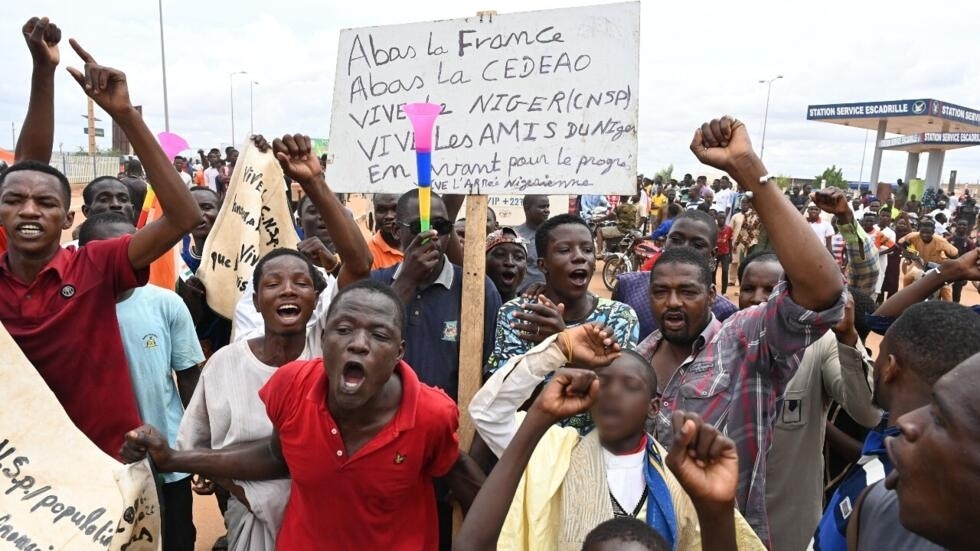
A significant gathering of coup supporters took place near a French military base in Niger, signaling escalating tensions just after West African leaders revealed plans to assemble a “standby” force aimed at reinstating the deposed leader.
The ex-president’s deteriorating detention conditions raised further concerns, as fears grew for his well-being.
Protesters near the military base on the outskirts of the capital, Niamey, expressed their dissatisfaction with both France and the West African bloc, ECOWAS, which approved the deployment of a “standby force to restore constitutional order.”
Many demonstrators waved flags, including those of Russia and Niger, while voicing support for the new strongman, General Abdourahamane Tiani.
The sentiments expressed in the protest underscoreed anti-French sentiments, accusing France of manipulation and lacking the true independence of ECOWAS.
ALSO READ: Burkina Faso’s junta suspends radio station for criticizing Niger’s leadership
France has a considerable presence in Niger, participating in the fight against a prolonged jihadist insurgency.
European Union, African Union, and United Nations officials expressed deep concern about the deposed president’s worsening conditions.
Reports indicated that Mohamed Bazoum and his family faced deprivation of essential resources, raising alarms about potential human rights violations.
The coup leaders’ defiance of ECOWAS’ ultimatum to restore the ousted leader to power heightened regional tensions.
Although intervention discussions have taken place, they remain contentious, with Mali and Burkina Faso warning against any actions that might lead to a “declaration of war.”
Niger, facing its fifth coup since gaining independence from France in 1960, is grappling with severe internal challenges, including a brutal jihadist insurgency and a fragile governance system.
The recent developments underscore the delicate balance between regional stability, intervention considerations, and concerns for human rights and democratic governance.
 AGS NEWS