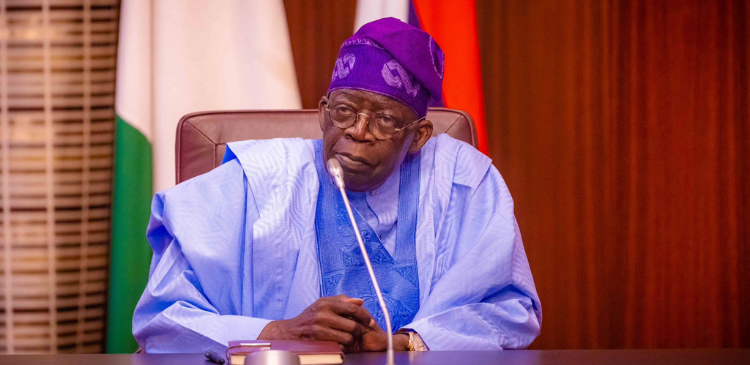
In a meeting led by Vice President Kashim Shettima, President Bola Tinubu made it clear to the National Economic Council (NEC) that he would not accept any excuses for failure.
The NEC, comprising the vice president, 36 governors, the governor of the Central Bank of Nigeria, and other government officials, manages the country’s economy.
Tinubu directed the council to devise interventions to mitigate the impact of the removal of petroleum subsidy.
He emphasized the need for the council’s support in transforming the economic fortunes of the nation and reaffirmed his administration’s commitment to fulfilling its promises to the Nigerian people.
During the meeting, the NEC also discussed the possibility of implementing a payment of N702.919 billion as a consequential adjustment recommended by the National Income, Salaries and Wages Commission.
This payment aims to alleviate the effects of the fuel subsidy removal. Additionally, the council considered a recommendation to allocate a monthly petroleum allowance of N23 to N25 billion for workers.
The council set up a committee to review the issues and provide recommendations within two weeks, ensuring a holistic decision to address the challenges faced due to the subsidy removal.
The meeting also highlighted the ongoing efforts to develop the automotive industry in Nigeria, with several states benefiting from domestic vehicle production and assembly.
The National Automotive Design and Development Council presented the progress in the industry, emphasizing the creation of approximately 50,000 jobs and the manufacturing of electric and compressed natural gas (CNG) vehicles.
The NEC discussed legislative support and funding options to accelerate the production of electric and CNG vehicles, aiming to reduce dependence on petroleum products and support the transition to net-zero emissions.
Various governors and government officials provided additional insights during the meeting, emphasizing the need for palliative measures to mitigate the impact of the subsidy removal on vulnerable individuals and the poor.
The NEC discussed the NG-Cares program, a World Bank-funded initiative aimed at providing emergency palliatives and social interventions for smallholder farmers, MSMEs, and other vulnerable groups.
The council explored avenues for additional financing and pledged to pursue these recommendations to benefit the Nigerian population.
 AGS NEWS