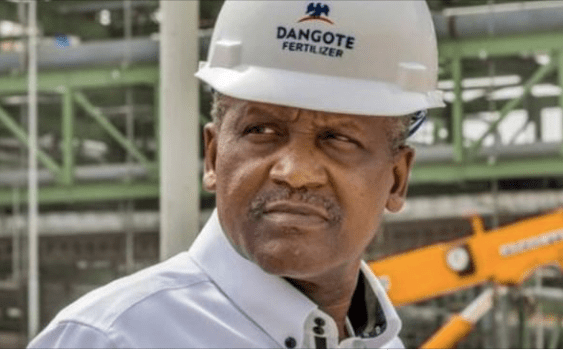
Yesterday, President Muhammadu Buhari officially commissioned the highly anticipated Dangote Refinery, marking a significant milestone for Nigeria’s energy sector and import-export relations.
With a staggering investment of $18.5 billion, the refinery is set to revolutionize the country’s economy and reshape its history.
Nigeria has heavily relied on imported petroleum products due to the closure of state-owned refineries. The government has been subsidizing the cost of these products, particularly premium motor spirit (PMS), commonly known as gasoline.
The removal of PMS subsidies has been a contentious issue, and the Petroleum Industry Act (PIA) signed by the outgoing administration aimed to address this.
The full implementation of the PIA, including subsidy management reforms, is scheduled for June 1, 2023, under the leadership of President-elect Bola Tinubu.
The Dangote Refinery has a refining capacity of 650,000 barrels per day (BPD), surpassing Nigeria’s estimated daily consumption needs of 450,000 BPD.
This excess production presents an opportunity for Nigeria to transition from being an importer of petroleum products to a net exporter, significantly reducing its dependence on imports and saving billions of dollars in foreign exchange.
During the commissioning, President Buhari acknowledged the challenges faced by Nigeria’s economy, including infrastructure deficits, insurgencies, and external shocks.
ALSO READ: Labour party presidential candidate hails Dangote refinery as game changer for Nigeria’s economy
He commended Aliko Dangote, the founder of the Dangote Group, for his commitment to transforming the country’s economy through private sector participation and public-private partnerships.
President Buhari expressed confidence in President-elect Tinubu’s ability to sustain economic growth and development.
The Dangote Refinery, located in Lekki, Lagos state, has the capacity to produce a range of refined petroleum products, including gasoline, diesel, aviation fuel, and liquefied petroleum gas.
By meeting domestic fuel consumption needs and having surplus products for export, the refinery is expected to contribute significantly to Nigeria’s foreign exchange earnings and reduce the pressure on the country’s balance of payments.
The Central Bank of Nigeria (CBN) Governor, Godwin Emefiele, emphasized the refinery’s potential impact on Nigeria’s foreign exchange shortage.
He projected that the refinery could save the country between $25 billion and $30 billion annually and contribute to foreign exchange reserve accumulation. Emefiele highlighted the CBN’s support for the project, including providing domestic currency requirements and ensuring the availability of foreign exchange for machinery imports.
While the Dangote Refinery offers immense potential for Nigeria’s energy sector, the Centre for Transparency Advocacy (CTA) called on the government to ensure transparency and address concerns regarding Nigerian interests and subsidy payments.
ALSO READ: Labour party presidential candidate hails Dangote refinery as game changer for Nigeria’s economy
The CTA urged the incoming government to prioritize the revival of existing refineries in addition to the Dangote Refinery.
The project is complemented by a 435-megawatt independent power plant (IPP), which will provide sufficient electricity for the surrounding areas.
Aliko Dangote expressed gratitude for the CBN’s intervention and highlighted the refinery’s capacity to meet Nigeria’s consumption needs while having a surplus for export.
He emphasized the creation of job opportunities and the potential for Nigeria to become a leading nation in Africa.
President Nana Akufo-Addo of Ghana, President Mohammed Bazoum of Niger, and President Macky Sall of Senegal commended Aliko Dangote’s entrepreneurial spirit and the transformative impact of the refinery.
Mele Kyari, the Managing Director of NNPC Limited, assured continued support for domestic refining investments to meet the growing demand for petroleum products.
 AGS NEWS