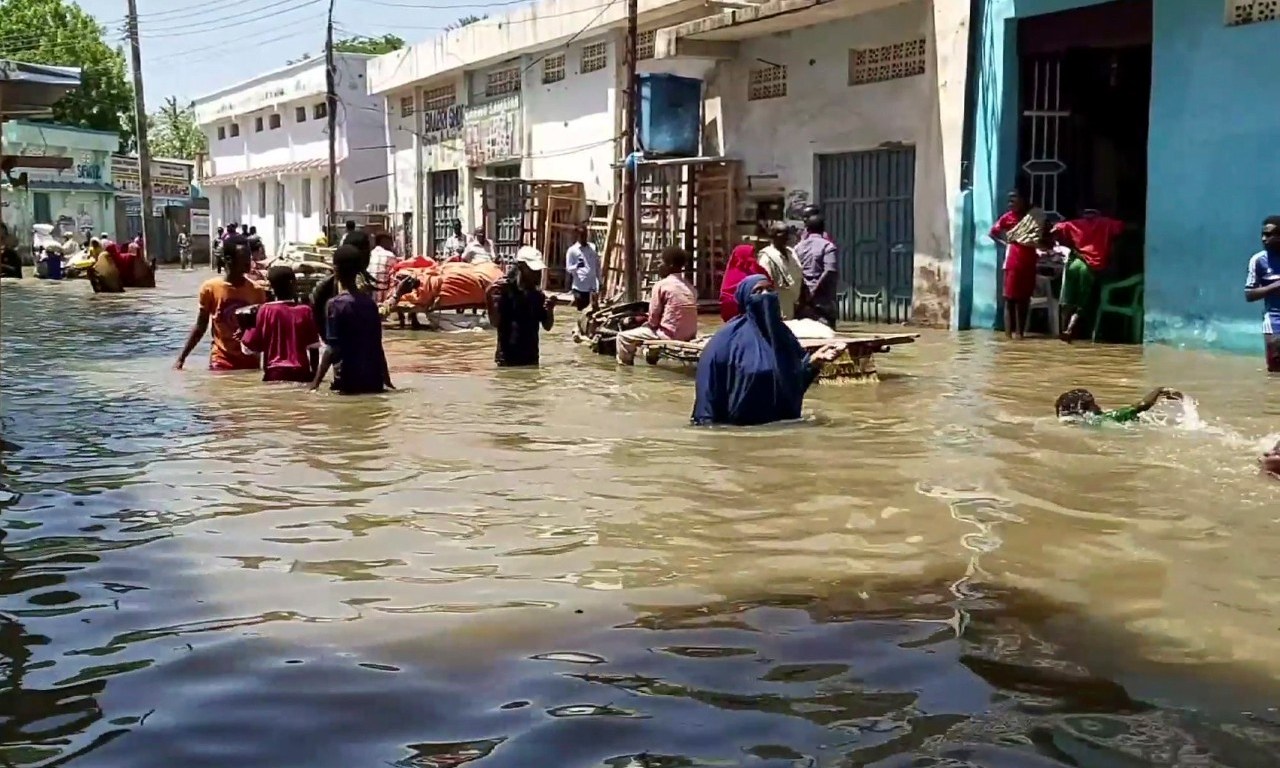
In March 2023, Ethiopia and Somalia were hit by flash flooding caused by heavy rains, resulting in the loss of dozens of lives and affecting around 300,000 people.
This devastating flooding came as a stark contrast to the nearly three years of extreme drought the region had experienced.
According to a report from Crop Monitor, parts of Ethiopia received 5 to 10 centimeters more rainfall than usual during the first 25 days of March.
ALSO READ: Refugees flee Sudan as violence continues, seek shelter in Ethiopia
Normally, the rainy season starts in Kenya and moves north to Ethiopia and Somalia, but this year the rains began simultaneously, leading to unusually wet conditions in all three countries.
The excessive rainfall caused the Shabelle and Juba rivers in the Ethiopian highlands to overflow, leading to the destruction of homes, schools, and health facilities along their banks in southern Somalia and eastern Ethiopia.
The Horn of Africa had been grappling with severe drought for almost three years, resulting in the displacement of 1.4 million Somalis and the death of 3.8 million livestock.
The Shabelle-Juba river basins experienced their lowest rainfall levels since 1981.
Caroline Wainwright, a climate scientist, emphasized that the recent flooding not only reversed the effects of three years of drought but also highlighted a shift in rainfall patterns.
Her research indicated that the long rains in East Africa had been getting drier from the mid-1980s to 2010. Climate projections suggested that by 2030-2040, the short rains could bring more rainfall than the long rains.
The heavy rains submerged over 1,000 hectares of cropland, posing a significant challenge to the agricultural economies of Ethiopia and Somalia.
ALSO READ: Kenya receives first batch of evacuees from Sudan
Agriculture employs a large portion of the population in both countries, and much of the farmland relies on rainfall. Unfortunately, the intense rainfall following a prolonged drought led to the loss of crops and topsoil.
Additionally, inadequate infrastructure for water storage exacerbated the situation.
Despite the unexpected heavy rains in March, climate models indicate that the long rains for this year will likely be drier than normal, suggesting that drought conditions are likely to persist.
 AGS NEWS