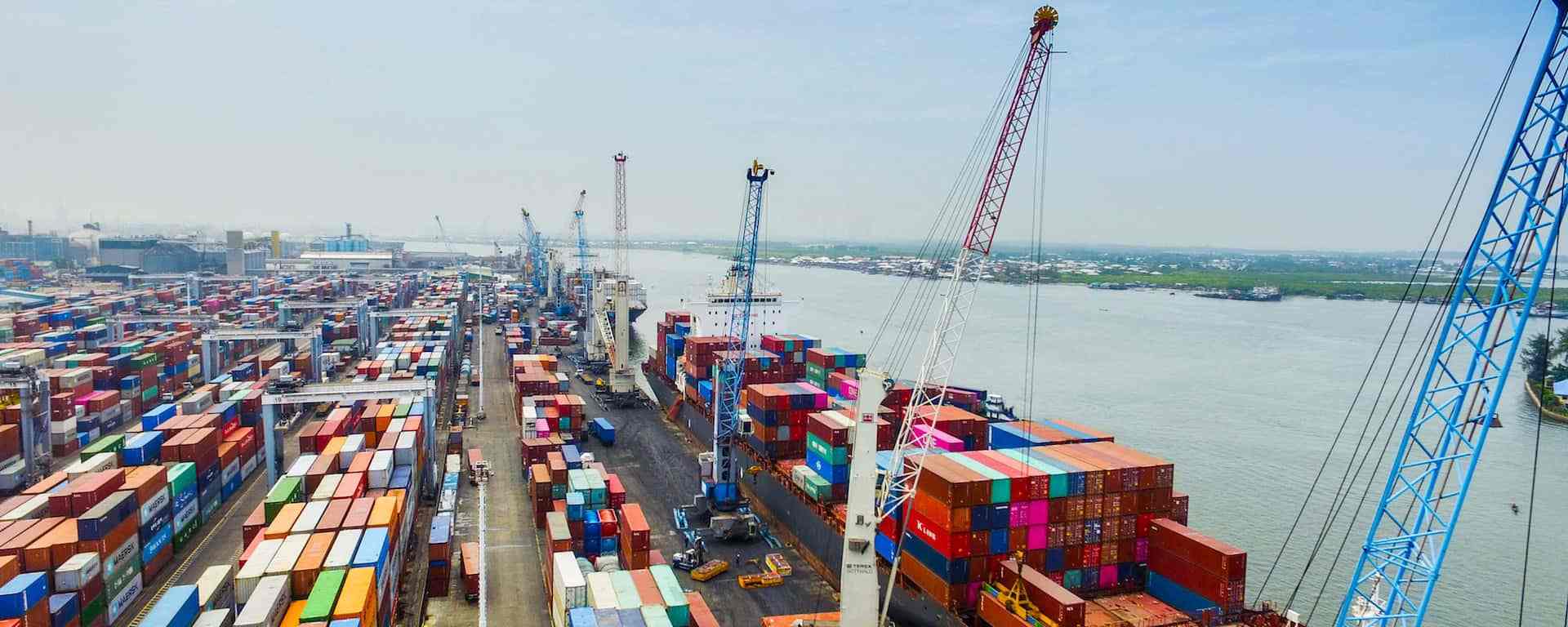
The developers of Lekki Port and Lekki Freeport Terminal (LFT) have revealed their ongoing discussions to transfer containers discharged at Lekki Port to Eastern Ports such as Calabar, Warri, and Onitsha River Port.
This move aims to enhance the economic growth of these ports. Furthermore, the $1.5 billion Lekki Port plans to commence transshipment of cargoes to landlocked countries in the coming weeks.
During a press briefing in Lagos, Kehinde Olubi-Neye, the Chief Commercial Officer of LFT, shared that the port has successfully transported more than five barges, carrying over 900 twenty-foot equivalent units (TEUs) of containers, from Lekki Port to the Ikorodu area of Lagos.
ALSO READ: Jamie Foxx’s daughter denies reports of father’s critical illness
The company has invested $100 million in cargo handling equipment to expedite cargo clearance and movement.
Olubi-Neye assured that Lekki Port possesses the necessary technical capacity, draft, and state-of-the-art equipment to facilitate the transshipment of cargoes bound for landlocked countries.
Meanwhile, Lawrence Smith, the Chief Operating Officer of Lekki Port, emphasized the importance of embracing and promoting the port, as it has the potential to create numerous job opportunities and generate substantial revenue for the economy.
Smith mentioned that the port operates an automated system, linked to the automated gate, with a vehicle booking system, enabling truck drivers to schedule appointments in advance.
The port has also completed a truck park with a capacity for 150 trucks.
ALSO READ: Lagos state government arraigns Eze Ndigbo on terrorism charges
The Nigerian Ports Authority (NPA), represented by Mohammed Bello-Koko, the Managing Director (MD), assured their commitment to granting necessary approvals and providing marine services to the port.
Additionally, Garba Hayatu, the Zonal Administrator of the Nigeria Export Processing Authority (NEPZA), pledged to offer the required incentives and emphasized that all equipment was imported duty-free, providing an alternative for trade facilitation diversification.
 AGS NEWS