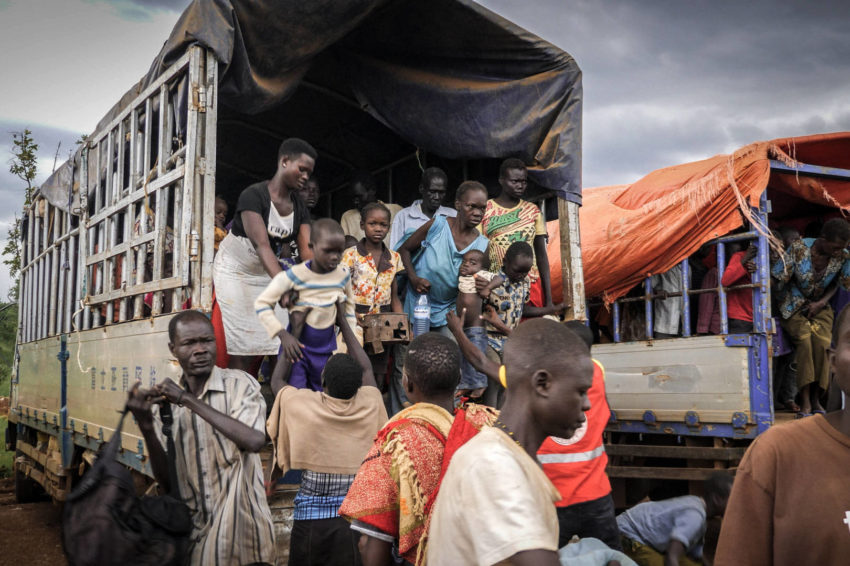
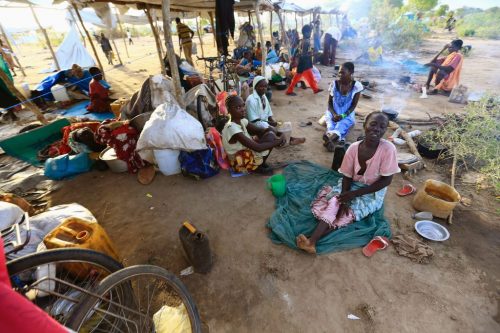
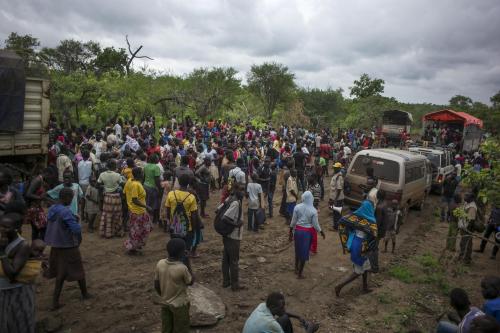
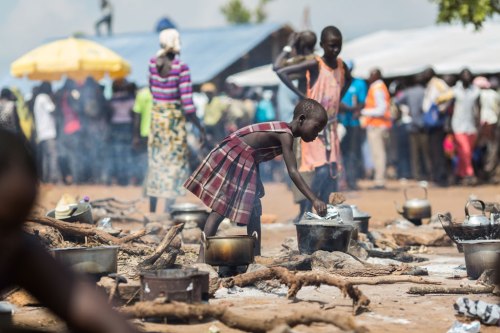
Refugees have fled ongoing violent unrest in Sudan and crossed the border into Ethiopia. The fighting began on April 15 between the army and paramilitary forces, and so far, at least 700 people have been killed, with most of them being civilians.
Many refugees have expressed their concern for their safety and lives, saying that they cannot think of what they have left behind. Gun battles and air strikes on Sunday flared in Khartoum, Sudan’s capital, which has been rocked by four weeks of fighting, despite the latest ceasefire efforts backed by Saudi Arabia and the United States.
Multiple truce deals have been declared and quickly violated since fighting erupted between army and paramilitary forces.
The situation has resulted in the death of at least 700 people, most of them civilians, wounded thousands and driven a mass exodus of Sudanese and foreign nationals.
Across the Red Sea, in the Saudi city of Jeddah, talks were underway aiming for a ceasefire that could aid the desperate efforts to bring humanitarian aid to the besieged population.
The generals leading the warring parties have blamed each other for the violence, but have said little about the talks being held in Jeddah since Saturday.
Hopes for international efforts to silence the guns have been modest as fighting has raged, threatening a descent into full-scale civil war and a major humanitarian disaster.
Meanwhile, both sides have pushed for military advantage on the ground, in the capital, and in fighting elsewhere, including the long-troubled Darfur region.
Andreas Krieg of King’s College London said that “the battle for Khartoum is quickly developing into a war of attrition where both sides have similar capabilities and capacities.”
ALSO READ: Sudan crisis forces Nigerian evacuees to sleep on the floor as bullets kill people on beds
The army, commanded by General Abdel Fattah al-Burhan, has air power and probably more troops, at around 100,000 forces. But the RSF, which emerged out of the notorious Janjaweed militia accused of war crimes in the Darfur region, employs guerrilla tactics that can make them “more agile.”
Both the army and the RSF have sought to present themselves as protectors of democratic values, despite having jointly staged Sudan’s latest coup in 2021.
Burhan and his former deputy Daglo jointly ousted Sudan’s longtime autocrat Omar al-Bashir in a 2019 palace coup, following mass pro-democracy protests. A military-civilian administration was supposed to steer post-Bashir Sudan toward democracy, but the generals launched another coup in 2021 to assume full powers.
They have since fallen out in a bitter power struggle, with the latest flashpoint a plan to integrate the RSF into the army – a conflict that exploded into open warfare four weeks ago.
US intelligence chief Avril Haines has warned of a “protracted” conflict that would “create a greater potential for spillover challenges in the region.”
The Sudanese doctors’ union said 479 of the dead were civilians, and hundreds of thousands have been displaced either internally or to neighboring countries, while the UN has warned of a deepening humanitarian crisis and the threat of famine.
 AGS NEWS