The Federal Government has disclosed that Nigeria has spent a total of N13 trillion ($74 billion) on subsidizing Premium Motor Spirit, commonly known as petrol, between 2005 and 2021.
This revelation was made during a policy dialogue on oil swap, co-hosted by the Nigeria Extractive Industries Transparency Initiative (NEITI) and Policy Alert, a local civil society organization, with support from the Opening Extractives, in Abuja.
NEITI’s Executive Secretary, Orji Ogbonnaya-Orji, emphasized the urgent need for a decision on the agitation for fuel subsidy removal, stating that full deregulation of the petroleum sector would permanently address the issue of oil swaps.
NEITI’s latest policy brief titled, “The cost of fuel subsidy: A case for policy review,” revealed that the N13 trillion spent on fuel subsidies between 2005 and 2021 is equivalent to Nigeria’s entire budget for health, education, agriculture, and defense in the last five years, and almost the capital expenditure for 10 years between 2011 and 2020.
Orji also highlighted other economic opportunity costs of fuel subsidies, such as slashing allocations for critical sectors like health, education, and technology infrastructure, the declining performance of Nigeria’s refineries, disincentivizing private sector investment in the petroleum sector, low employment generation, worsening national debt, declining balance of payment, forex pressures, depreciation of the naira, product losses, inefficient supply arrangements, scarcity, and long queues at petrol stations.
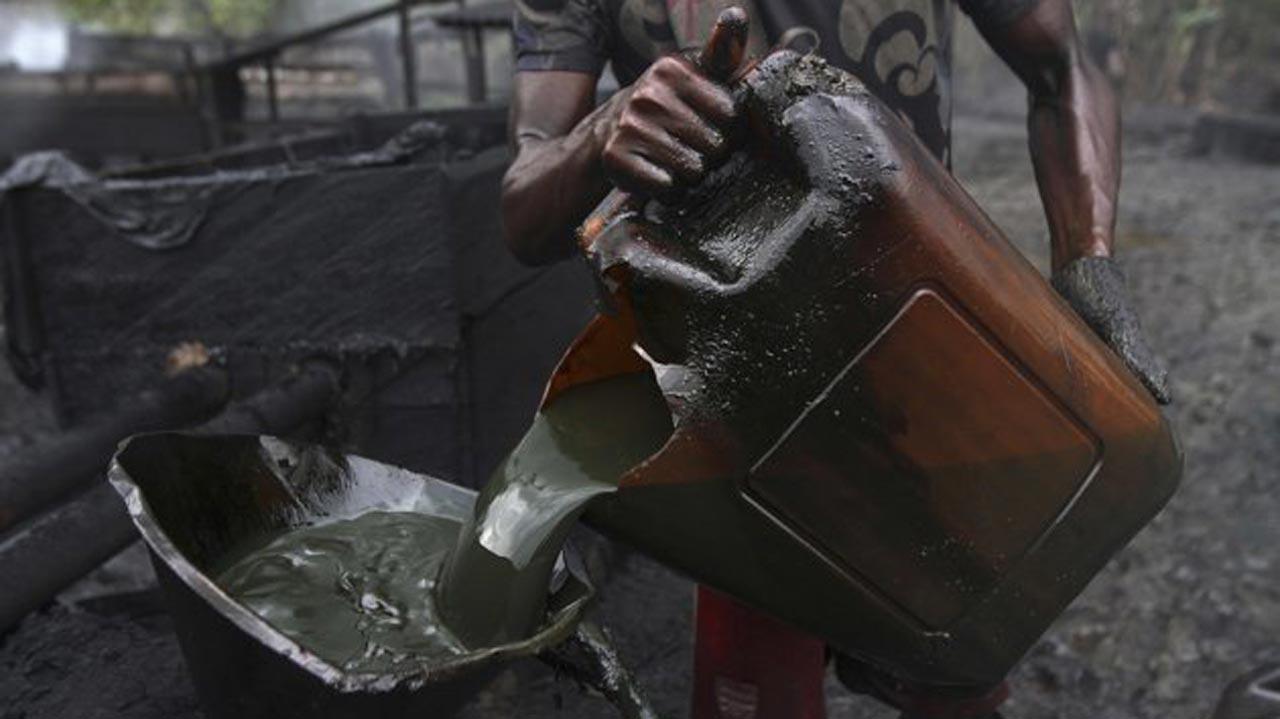
Additionally, NEITI revealed that Nigeria lost a staggering N16.3 trillion ($46.16 billion) or 619.7 million barrels of crude oil to oil theft between 2009 and 2020. This represents a daily loss of over 140,000 barrels of crude oil during the 12-year period. NEITI also noted that between 2009 and 2018, Nigeria lost 4.2 billion liters of petroleum products from refineries valued at $1.84 billion.
These findings and recommendations on tackling crude oil theft have been submitted to the President through the Presidential Committee on Crude Oil Theft, in which NEITI served as a member.
The presentation also highlighted the status of the implementation of the Petroleum Industry Act (PIA) and emphasized the need for transparency in the progress of the Presidential Steering Committee on the implementation of the PIA, which was set up in 2021 to coordinate the implementation of the Act.
NEITI called on civil society organizations to advocate for the conclusion of the committee’s work and submission of its report to the President before the expiration of the current administration, with clear recommendations for the next administration on the progress made and outstanding work.
NEITI explained that oil swap deals were introduced in 2010 as a solution to the near-total collapse of Nigeria’s four refineries, which made it difficult for the Nigerian National Petroleum Corporation (NNPC) to refine the allocated 445,000 barrels per day of domestic crude oil.
ALSO READ: SPDC denies violating Nigerian Content Law at EA fields in Bayelsa
NNPC then exported most of the crude oil and relied on the Pipeline Products Marketing Company Limited or private oil marketers to import refined products for local consumption, leading to debts and scarcity of refined products with long queues at petrol stations nationwide.
The two kinds of swaps adopted by NNPC were the Offshore Processing Agreement, where a refiner or trading company contracted to lift a specified volume of crude, refine it abroad, and deliver the resulting refined products back to NNPC, and the Crude-oil-for-Refined-Product Exchange Agreement, where crude was allocated to a trader who was responsible for importing refined products to match the value of the crude, less agreed-upon fees and expenses.
 AGS NEWS