Italy has become the first Western country to block advanced chatbot ChatGPT, citing privacy concerns. The Italian data-protection authority announced that it would ban and investigate US start-up OpenAI, which created ChatGPT and is backed by Microsoft, “with immediate effect”. Millions of people have used ChatGPT since its launch in November 2022, as it can answer questions using natural, human-like language and can also mimic other writing styles using the internet as its database.
Microsoft has spent billions of dollars on ChatGPT, and it was added to Bing last month. The technology will also be embedded in Microsoft Office apps, including Word, Excel, PowerPoint, and Outlook.
The potential risks of artificial intelligence (AI), including its threat to jobs and the spreading of misinformation and bias, have raised concerns. This week, Elon Musk and other tech leaders called for the suspension of these types of AI systems amid fears that the race to develop them was out of control.
ALSO READ: Microsoft seeks to control Bing AI chatbot following problematic replies
The Italian watchdog said that not only would it block OpenAI’s chatbot, but it would also investigate whether it complied with the General Data Protection Regulation (GDPR), which governs the way in which personal data can be used, processed, and stored. The watchdog reported a data breach on 20 March, involving user conversations and payment information.
It said there was no legal basis to justify “the mass collection and storage of personal data for the purpose of ‘training’ the algorithms underlying the operation of the platform.” Additionally, it said that since there was no way to verify the age of users, the app “exposes minors to absolutely unsuitable answers compared to their degree of development and awareness.” Google’s rival AI chatbot, Bard, is now available, but only to specific users over the age of 18 due to these same concerns.
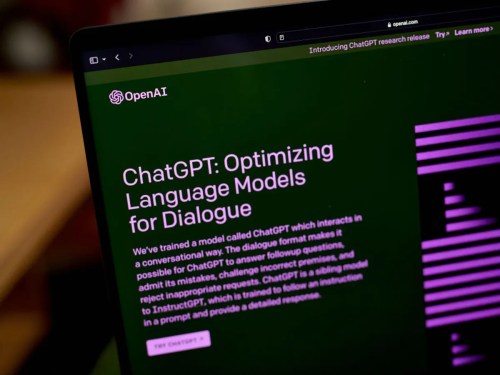
OpenAI has 20 days to address the watchdog’s concerns, under penalty of a fine of €20 million ($21.7m) or up to 4% of annual revenues. The Irish data protection commission is also following up with the Italian regulator to understand the basis for their action and “will coordinate with all EU data protection authorities” in connection to the ban.
ALSO READ: Tesla owners in China stage protests in showrooms and distribution centers
The UK’s independent data regulator, the Information Commissioner’s Office, said it would “support” developments in AI but was also ready to “challenge non-compliance” with data protection laws.
Consumer advocacy group BEUC also called on EU and national authorities, including data-protection watchdogs, to investigate ChatGPT and similar chatbots, following the filing of a complaint in the US. Although the EU is currently working on the world’s first legislation on AI, BEUC’s concern is that it would take years before the AI Act could take effect, leaving consumers at risk of harm from a technology that is not sufficiently regulated.
ALSO READ: Could AI replace millions of jobs? Let’s find out!
Ursula Pachl, deputy director general of BEUC, warned that society was “currently not protected enough from the harm” that AI can cause. “There are serious concerns growing about how ChatGPT and similar chatbots might deceive and manipulate people. These AI systems need greater public scrutiny, and public authorities must reassert control over them,” she said.
It is worth noting that ChatGPT is already blocked in several countries, including China, Iran, North Korea, and Russia. The ban in Italy is a significant move as it is the first time a Western country has taken action against the technology. The debate around the regulation of AI and its use will undoubtedly continue as its capabilities expand, and its potential to impact society increases.
 AGS NEWS